
Store Layout & Navigation Traps
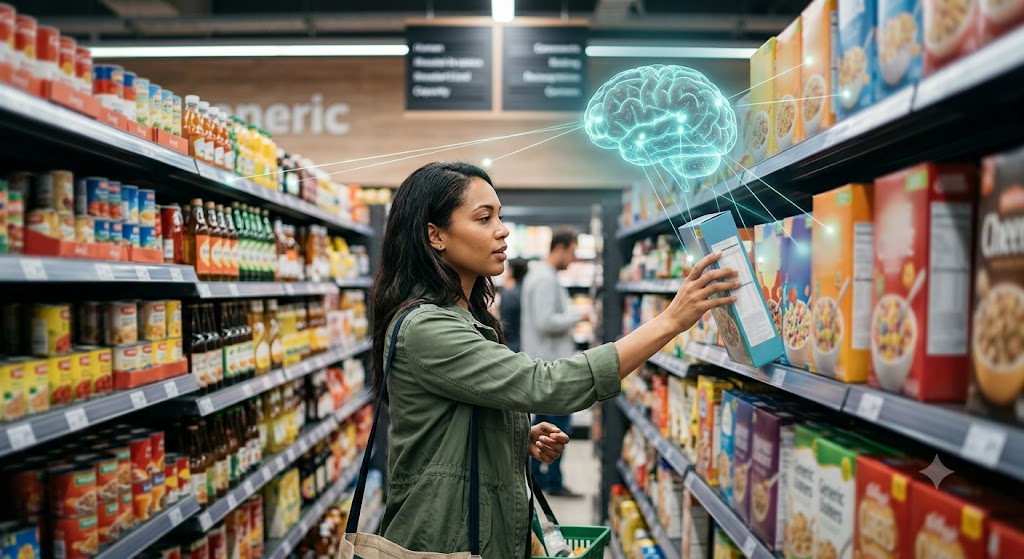
Retailers treat physical store design like a casino. Every tile, turn, and aisle placement is engineered to keep you inside longer.
1. The Right-Hand Drift: Over 90% of people naturally turn right upon entering a retail store. Brands pay a premium for display space on the right-hand side near the entrance because it gets the highest foot traffic.
2. The “Milk at the Back” Trap: Staples like milk, bread, and eggs are intentionally placed at the back corner of grocery stores. This forces you to walk past thousands of impulse-buy items just to grab basic necessities.
3. The Decompressing Zone: The first 10–15 feet inside a store entrance is known as the “decompression zone.” Retailers almost never put high-margin items here because shoppers are still adjusting to the environment and subconsciously ignore everything in this area.
4. Eye Level is “Buy Level”: Products placed at eye level (roughly 4 to 5 feet off the ground) receive up to 35% more attention than items on upper or lower shelves. Major brands pay slotting fees worth millions to secure these middle shelves, while budget options are banished to the bottom.
5. Super-Sized Shopping Carts: Carts are nearly double the size they were 30 years ago. Psychological studies show that when a shopping cart looks empty, consumers subconsciously buy up to 40% more items to fill the perceived void.
Pricing Mind Games
Price tags aren’t just costs—they are carefully formatted psychological nudges.
6. The Decoy Effect: Movie theaters will sell a Small Popcorn for $4, a Medium for $6.50, and a Large for $7. The Medium isn’t meant to sell; its only job is to make the Large look like an absolute steal.
7. Left-Digit Bias: $19.99 feels significantly cheaper than $20.00 because human brains read from left to right and anchor on the number 19, ignoring the fractional change
8. Removing Dollar Signs: High-end restaurants and luxury boutiques often drop the dollar sign ($) from menus and price tags (e.g., listing “42” instead of “$42”). Stripping the currency symbol softens the “pain of paying” in the brain
9. Anchor Pricing: Showing a crossed-out “Original Price: $200” next to a “Sale Price: $89” triggers an immediate dopamine hit. Even if the item was never actually sold at $200, your brain calculates a $111 win rather than an $89 loss.
10. The Rule of 100: Discounts on items under $100 look larger when stated as percentages (e.g., “20% off a $30 shirt” sounds better than “$6 off”). Items over $100 look like a better deal in dollar amounts (e.g., “$200 off a $1,000 TV” sounds better than “20% off”).
Sensory Manipulation
Stores manipulate your senses without you ever realizing your mood—and spending—has been altered.
11. Tempo Pacing: Slow-tempo background music relaxes shoppers and subconsciously causes them to walk slower. Studies show playing slow music increases total supermarket sales by roughly 38% compared to fast music.
12. The Cinnabon/Abercrombie Effect: “Scent marketing” pumps artificial fragrances through HVAC vents. Fresh bread scents near bakeries or signature colognes in clothing stores trigger emotional hunger and brand association before you see a single product.
13. Mirrors That Flatter: Many clothing fitting rooms use slightly tilted mirrors or specialized warm lighting designed to make customers look slimmer, taller, and tanner, making them feel better about how the clothes look.
14. Small Floor Tiles: Grocery stores often use smaller floor tiles in high-margin aisles (like wine or bakery). The faster click-clack noise of cart wheels on smaller tiles tricks your brain into thinking you’re walking too fast, causing you to slow down.
15. Red vs. Blue Discounts: Men are statistically more likely to respond impulsively to prices written in red font because they associate red with urgency and deep value, whereas women tend to evaluate the surrounding context more closely regardless of color.
Sensory Manipulation & Atmosphere
16. Windowless Labyrinths: Most major department stores and casinos do not have windows or clocks. This is an intentional design choice to detach you from the outside world and the passing of time, encouraging you to stay—and spend—longer.
17. The Produce Section Greeter: Placing vibrant, colorful fruits and fresh flowers right at the front entrance exploits the “primacy effect,” putting your brain into an open, positive, and receptive buying mood.
18. Carpet to Linoleum Transitions: High-end department stores use hard flooring (like tile or wood) in main walkways to keep your pace fast, but transition to plush carpets inside specific brand boutiques to make you slow down, relax, and linger.
19. The Free Sample Obligation: Handing out free food samples at grocery stores isn’t just hospitality; it triggers the psychological rule of reciprocity, making you feel subconsciously obligated to buy the product after accepting a gift.
20. The Warmth Illusion: Retailers keep ambient temperatures slightly warmer than comfortable during winter months (and cooler in summer) to make shoppers want to stay inside the building longer, directly increasing total browsing time.
E-Commerce Dark Patterns & Digital Traps
Online shopping has taken physical manipulation and supercharged it with real-time data tracking and behavioral code.
21. Artificial Urgency Timers: Countdown clocks on e-commerce checkouts (e.g., “Your cart expires in 04:59”) manufacture false panic, short-circuiting your rational thought process and forcing an impulsive click.
22. Fake Social Proof Popups: When a website flashes a notification saying “John from Texas just bought this item 2 minutes ago,” it leverages herd mentality, exploiting your fear of missing out (FOMO) to validate the purchase.
23. Pre-Checked Add-Ons: Airlines and software sites love pre-checking boxes for travel insurance, extra warranties, or monthly donations. They rely on “default bias”—most users are too lazy or hurried to uncheck them.
24. Dynamic Pricing Scams: Travel and airline sites track your cookies and search frequency. If you look up the same flight multiple times, prices can artificially climb to create panic that prices are rising globally.
25. The Maze Checkout (Roach Motel): Signing up for a subscription takes one click, but canceling it requires navigating a labyrinth of hidden menus, phone calls, and retention surveys designed to exhaust you into giving up.
26. Drip Pricing: Showing a low initial price on a ticket or hotel room, only to reveal massive service fees, cleaning fees, and processing taxes on the very last screen of checkout.
27. Frictionless One-Click Buying: Saving your credit card information globally (like Amazon’s 1-Click) removes the “pain of paying” by eliminating the physical friction of typing out numbers and billing addresses.
28. Burying the Free Option: When sorting software tiers or shipping speeds, companies often list the most expensive option at the top and visually hide standard or free shipping options beneath faint, tiny gray text.
29. Personalized Surveillance Pricing: Retail apps track your location, device type (e.g., Mac users often see higher hotel rates than PC users), and browsing history to serve you custom prices tailored to your perceived wealth.
30. Infinite Scrolling: Social media feeds and digital storefronts use infinite scroll to remove natural stopping points, keeping your brain hooked in a perpetual loop of content and product discovery.
Social Conditioning & Packaging Deceptions
Brands manipulate how you perceive value through peer pressure, optical illusions, and packaging trickery.
-
The Power of End Caps: The display shelves at the very end of supermarket aisles are called “end caps”. Items placed here see massive sales spikes—even if they aren’t actually discounted—simply because they break up the monotony of the aisle.
-
Shrinkflation: Brands quietly reduce the size or volume of a product (e.g., going from 16 ounces to 14 ounces) while keeping the price exactly the same, betting that consumers won’t notice minor net-weight changes.
-
The Mannequin Illusion: Mannequins aren’t just clothes-holders; they are psychological projection tools. They are built with idealized proportions to subconsciously trick shoppers into visualizing how garments will look on an idealized version of themselves.
-
Misleading Imagery on Boxes: Food packaging often shows serving suggestions (like adding milk and fresh berries to a basic cereal box) that imply the contents of the box include those items, subtly inflating the perceived value of the product.
-
The Prestige of Heavy Packaging: Luxury brands intentionally add heavy metal weights or thick glass bottoms to perfume bottles and cosmetic jars because human brains instinctively equate physical weight with high quality and luxury.
-
Checkout Lane Impulse Traps: The checkout queue is the most profitable real estate in retail. Trapped in a slow-moving line with decision fatigue, shoppers easily cave to high-margin, low-cost impulse items like candy, gum, and magazines.
-
The Illusion of Wholesale Clubs: Bulk stores (like Costco or Sam’s Club) package items in massive quantities. This tricks the brain into calculating a low “unit price,” leading shoppers to spend far more total cash on items they may never fully consume.
-
The “Best Seller” Label Effect: Slapping a “Customer Favorite” or “Award Winner” badge on a product shifts consumer evaluation from critical analysis to blind trust through social conformity.
-
Color-Coded Health Halos: Unhealthy processed foods frequently use green, earth-toned packaging to subconsciously trick buyers into associating the item with organic health, nature, and wellness.
-
Vague Eco-Friendly Buzzwords: Terms like “eco-friendly,” “naturally sourced,” or “green” are frequently unregulated, utilizing consumers’ ethical desires to justify higher price markups without verified substance.
The Neurochemistry & Economics of Spending
The deeper psychological hooks driving why your brain loves handing over money.
-
The Dopamine Hit of Shopping: Brain scans show that finding an item you want triggers a surge of dopamine—the chemical of anticipation and reward—before you even buy it. The actual purchase often leads to an immediate drop in neurochemicals.
-
Retail Therapy is Real: Buying things when stressed or bored acts as an emotional band-aid. Retailers exploit negative emotional states, designing campaigns around self-care, treating yourself, and emotional validation.
-
Credit Cards Numb Pain: Neuro-imaging studies prove that paying with cash lights up the brain’s pain centers (the insula). Swiping plastic or clicking “Apple Pay” completely bypasses this pain center, making you spend up to 100% more.
-
The Loyalty Card Trade-off: Loyalty programs reward you with minor points, but they give corporations hyper-detailed data profiles on your personal life, allowing them to target you with psychological triggers tailored to your exact weaknesses.
-
The Endowment Effect: Once you physically pick up an item in a store or place it in your digital cart, your brain psychologically claims ownership of it. Letting go of it later triggers a mild sense of loss aversion, compelling you to buy it just to avoid that feeling.
-
Clearance Rack Clutter: Dumping clearance items into messy, unorganized bins makes shoppers assume everything inside is a radical markdown, even if many items are regular-priced goods mixed in.
-
The Illusion of Scarcity: Phrases like “Only 2 items left in stock!” trigger ancient evolutionary survival mechanisms, making your brain panic over resource scarcity and override logical budgeting.
-
V.I.P. Tiered Pricing: Creating artificial membership tiers (Silver, Gold, Platinum) exploits status-seeking behavior, tricking customers into upgrading their spending brackets just to achieve an arbitrary digital badge of honor.
-
The Power of Free Shipping: Consumers will routinely spend an extra $15 on unwanted items just to qualify for a $5 “free shipping” threshold, mathematically losing money to feel like they beat the system.
-
The Post-Purchase Rationalization: After making an impulsive, manipulated purchase, your brain invents logical excuses to justify it (“It was on sale, and I really needed an upgrade anyway”), protecting you from buyer’s remorse and ensuring you fall for the exact same tricks next time.